Why this is in my collection
From the publisher:
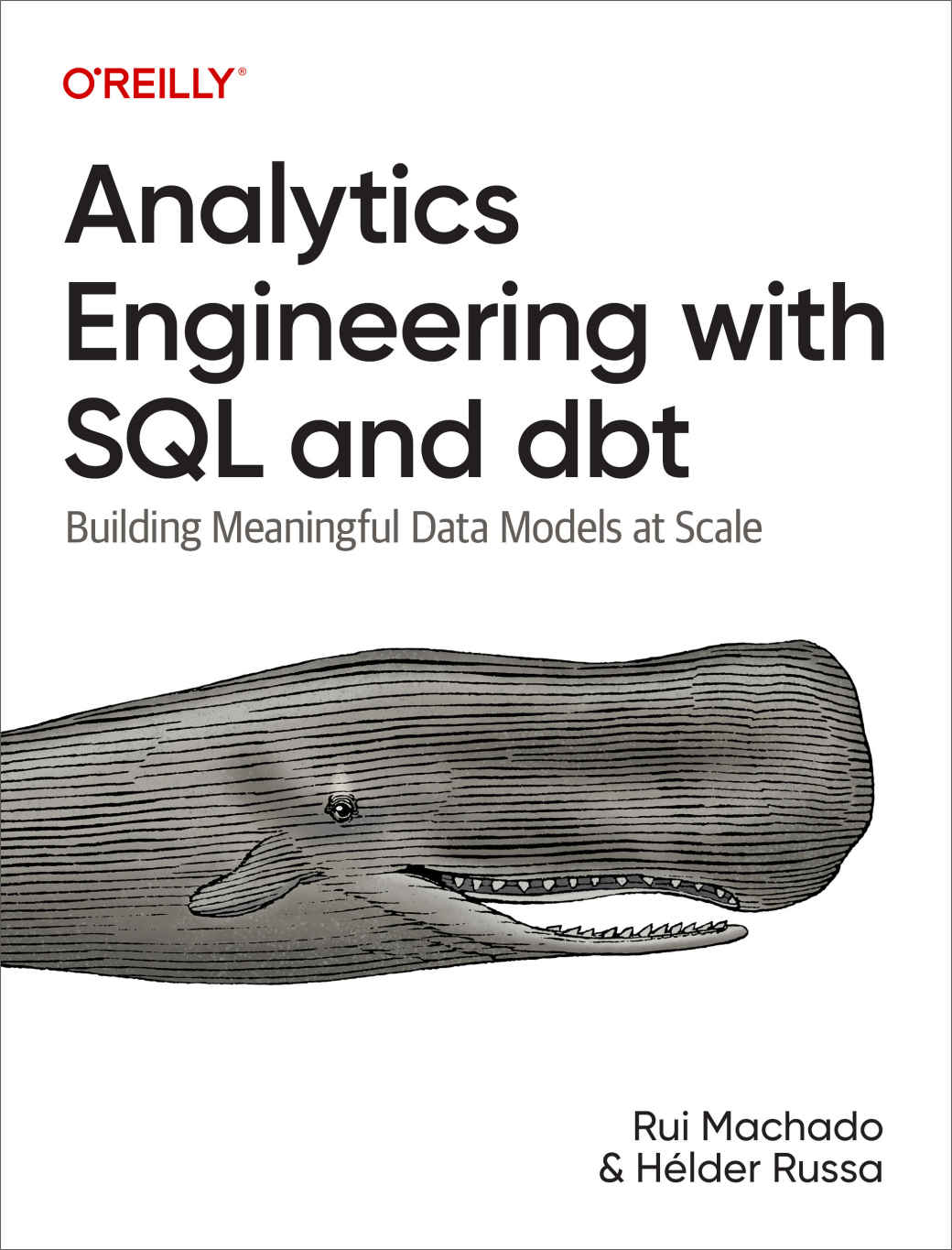
With the shift from data warehouses to data lakes, data now lands in repositories before it's been transformed, enabling engineers to model raw data into clean, well-defined datasets. DBT (data build tool) helps you take data further. This practical book shows data analysts, data engineers, BI developers, and data scientists how to create a true self-service transformation platform through the use of dynamic SQL.
Highlights
- Transformation as versioned code, not tool clicks — dbt's core proposition is that SQL transformations belong in git with review, testing, and CI; the software-engineering discipline data teams skipped for decades, finally arriving.
- Tests and documentation live next to the model definition — declaring uniqueness, not-null, and relationship expectations in the same YAML that defines the model makes constraints explicit and executable — a working, if partial, rules layer.
- The DAG is inferred, not maintained — dbt derives execution order from ref() dependencies instead of hand-kept orchestration; a taste of what full model-driven generation delivers when the entire pipeline, not just ordering, derives from declared structure.
- Jinja macros are pattern-extraction in miniature — once a transformation repeats, it becomes a parameterized macro; dbt users rediscover the MDDE insight that high pattern density is an invitation to generate, they just stop at the template level.
- Raw-first landing shifts modeling downstream — the lake-era move of loading before transforming makes the transformation layer the place where structure is imposed; which raises the question dbt does not answer: where does the model that drives those transformations live?
- Self-service needs guardrails to survive — a transformation platform anyone can extend only stays coherent through conventions, tests, and naming standards; freedom at scale is a product of structure, not an alternative to it.
Highlights on this page are generated with the help of AI.