Why this is in my collection
From the publisher:
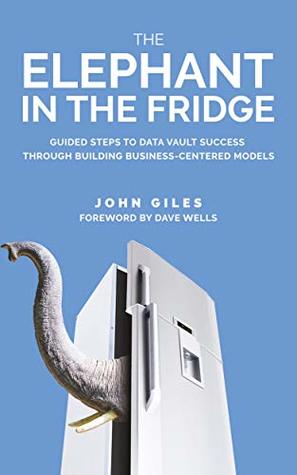
You want the rigor of good data architecture at the speed of agile? Then this is the missing link - your step-by-step guide to Data Vault success. Success with a Data Vault starts with the business and ends with the business. Sure, there's some technical stuff in the middle, and it is absolutely essential - but it's not sufficient on its own. This book will help you shape the business perspective, and weave it into the more technical aspects of Data Vault modeling. You can read the foundational books and go on courses, but one massive risk still remains. Dan Linstedt, the founder of the Data V
Highlights
- A vault starts with the business, not the sources — Giles's central warning is the source-driven vault: technically correct hubs copied from system tables that model the software instead of the enterprise, the failure mode Linstedt himself flags most often.
- Sketch the enterprise concept model first — a lightweight top-down view of the core business concepts, drawn before any hub is declared, is the guide-rail that keeps hub identification anchored in meaning rather than in whatever the ETL can reach.
- Business keys are meaning, not columns — identifying the key of a hub is a semantic act of naming what the business tracks, not a profiling exercise over candidate unique columns; this is where model quality is decided.
- Technical rigor is essential but insufficient — a perfectly pattern-conformant vault built on the wrong concepts is a well-built wrong answer, and under MDDE the stakes rise: generation amplifies whatever the model says, correct or not.
- Rigor at agile speed is the actual promise — Giles frames Data Vault as the reconciliation of good architecture with iterative delivery, which only holds because the patterns absorb change; structure is what makes speed safe.
- A guided sequence beats a body of theory — the book's step-by-step format is itself a lesson: a method only transfers when it is decomposed into an ordered, teachable path, the same discipline behind writing runbooks and concept libraries instead of relying on expertise-as-magic.
Highlights on this page are generated with the help of AI.