Why this is in my collection
From the publisher:
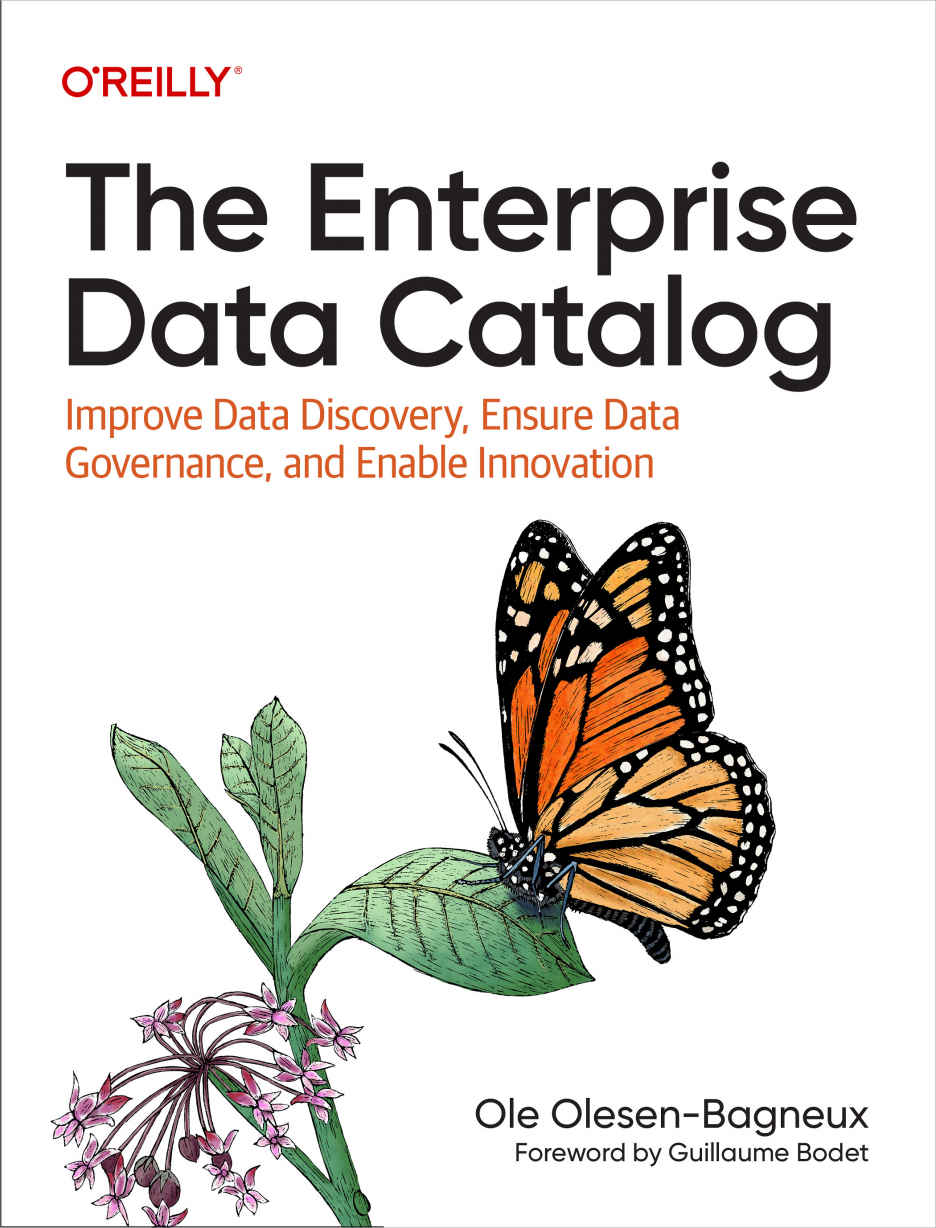
How do you search for data? Combing the internet is simple. But do you search for data at work? It can be difficult and time-consuming. Sometimes it even seems impossible. This book introduces a practical solution: the data catalog. Data analysts, data scientists, and data engineers will learn how to create true data discovery in their organizations, making the catalog a key enabler for data-driven innovation and data governance.
Highlights
- Search inside the company should work like search on the web — the book's founding observation is the absurd gap between finding anything online in seconds and finding your own organization's data at all; discovery, not inventory, is the catalog's reason to exist.
- Library science is the missing discipline — Olesen-Bagneux (a trained librarian) imports controlled vocabularies, classification, and indexing into data management; the claim that findability is engineered through metadata structure is the enterprise-scale version of why a personal vault of tens of thousands of files stays navigable.
- The catalog is a map over data you don't move — it describes and links assets where they live rather than centralizing them, which makes it the natural companion to decentralized architectures and, at personal scale, to a vault where frontmatter is the catalog and files stay in place.
- Metadata has a model too — what the catalog can answer is decided by how its own metadata is structured; a poorly modeled catalog is just a second place where data goes missing, so the model-first argument applies to the metadata layer itself.
- Discovery-first catalogs get adopted, compliance-first ones die — governance outcomes arrive as a byproduct of a tool people actually use to find things, a sequencing insight that matches making structure serve the user before it serves the auditor.
- Data intelligence emerges from connected descriptions — once assets, terms, and people are linked, the catalog becomes a knowledge graph over the data landscape, the same concept-to-artifact graph pattern as a content system's concept library.
Highlights on this page are generated with the help of AI.